Book Launch
-- days : -- hrs : -- min : -- sec
Pre-order

01

Chicago

Country

United States

Coordinates

41.8781° N 87.6298° W

Era

Contemporary

Chicago is a highly underrated city.

Magnificently located on the southeastern shore of Lake Michigan, Chicago’s lakefront is occupied by parks, beaches, and marinas—the city planners banned the construction of manufacturing plants and warehouses along the lake, as it happened to most cities in the Great Lakes region.

Despite being one of the richest metropolitan areas in the world, Chicago has preserved a Midwestern pace and politeness, making it unique among great international cities. It is a very cosmopolitan place, originally a melting pot of Irish, Italian, Swedish, Lithuanian, Greek, and German immigrants, and later Mexican, Polish, Middle Eastern, Asian, and African presence.

Chicago is a city of art and culture. Its universities rank at the top of global lists; several world-class venues are located in the city, from the Art Institute to the Chicago Symphony and the Lyric Opera, not forgetting major dance and theater companies.

Chicago is not a city without problems: its finances have been a mess for several years, its public education system is highly problematic, and the city is deeply segregated, with residents of the rich neighborhoods living very differently from those in poorer areas of town.

Chicago continued to thrive and shine while most cities in the US Midwest lost business and population and began to decay. It is infamous for its harsh winters and strong winds, rather than for the bright Spring, quasi-tropical Summer, and glorious Fall weather.

Story Threads

  • Class Conflict
  • Urban Longing
  • Invisible Borders
  • Power
Media Atlas 9 assets

02

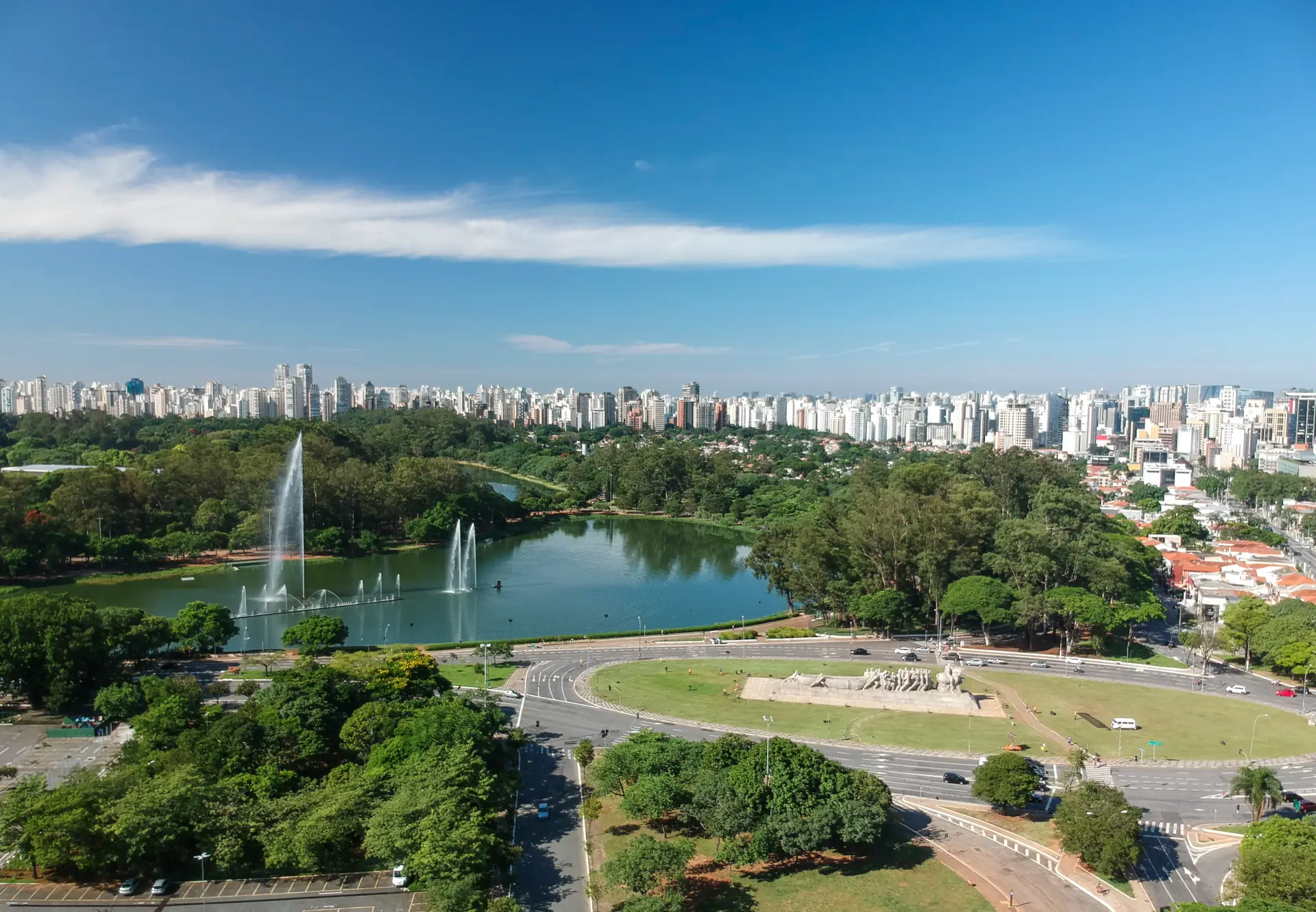
São Paulo

Country

Brazil

Coordinates

23.5505° S 46.6333° W

Era

Present Day

Seventeen million souls, and still no place to disappear.

Beginning as a small Jesuit school for the natives in the mid-16th century, São Paulo was, for centuries, a rough frontier outpost, the departure point for expeditions that ventured west to expand Portuguese dominions while also annihilating native settlements. Native attacks, depopulation, and economic stagnation almost destroyed the town several times, until in the late 19th century its history changed: the city became the main gateway between the coast and the large coffee plantations that spread in its countryside, a major railway connection point through which millions of tons of coffee beans and millions of immigrants traveled in opposite directions.

The immigrant labor force was fundamental to transforming São Paulo from a small entrepôt into a major industrial city. The rapid industrialization of Brazil after World War II was centered in São Paulo and its outskirts.

A veritable melting pot created by millions of Italians, Portuguese, Spanish, Germans, Syrians, Lebanese, Poles, and Japanese immigrants, the city became a magnet for internal migration from Brazil's least developed regions, leading to a unique mix of cultures and histories.

São Paulo is the heart of Brazil’s economy: most large Brazilian private companies are based in the city, and the majority of international organizations have their Latin American headquarters in São Paulo. The Brazilian stock market and the bulk of the country’s financial institutions are also located in São Paulo.

The highest-ranking university in Latin America, major research institutions, and world-class medical centers attract the best professionals in the country, as well as entrepreneurs, startupers, artists, thinkers, and revolutionaries.

São Paulo is the Brazilian capital of art and culture: dozens of major museums, two main symphony orchestras, and dozens of dance and theater companies. The city has 120 theaters, 320 movie screening places, and over 23,000 restaurants—the city is a gastronomic mecca. Its LGBTQ+ Pride Parade is recognized as the largest in the world, attracting over 3 million people to the festivities.

São Paulo also has many problems: traffic is a nightmare, subway lines are congested, and a large portion of the population lives in distant suburbs with a standard of living far below that of the leafy areas and fancy neighborhoods. Drug addiction and petty crime are major problems, although the city has a violent crime rate far below the Brazilian average (and significantly below cities such as Houston and Miami).

A city of work and ambition that does not hide behind tourist facades. A place that requires a deep dive into its culture and does not care for Instagrammable scenery.

Story Threads

  • Identity
  • Memory
  • Rupture
  • Diaspora
Media Atlas 24 assets

03

Ouro Preto

Country

Brazil

Coordinates

20.3855° S 43.5035° W

Era

Past & Present

The baroque city that refuses to let go of its ghosts.

Explorers from São Paulo found gold in the central Brazilian mountains in the late 17th century.

For most of the 18th century, those mines produced more than half of the world's gold. Ouro Preto was the regional center, a city that, in just a few years, grew from nothing to 60,000 inhabitants, one of the largest in the Americas at the time.

The city is a jewel of baroque and rococo architecture and art. The sudden decline in gold production stalled the city’s economy, allowing the entire downtown area to be preserved as a time capsule.

Ouro Preto is nowadays a thriving university town, where its inhabitants continue to live, shop, bank, and eat in well-preserved buildings dating back 200 years.

The city was declared a UNESCO World Heritage Site in 1980, the first place in Brazil to be added to the list.

Story Threads

  • History
  • Inheritance
  • Colonial Wound
  • Return
Media Atlas 9 assets

04

Congonhas do Campo

Country

Brazil

Coordinates

20.3000° S 43.5128° W

Era

Past & Present

Stone prophets, silent hills, and a faith carved into resistance.

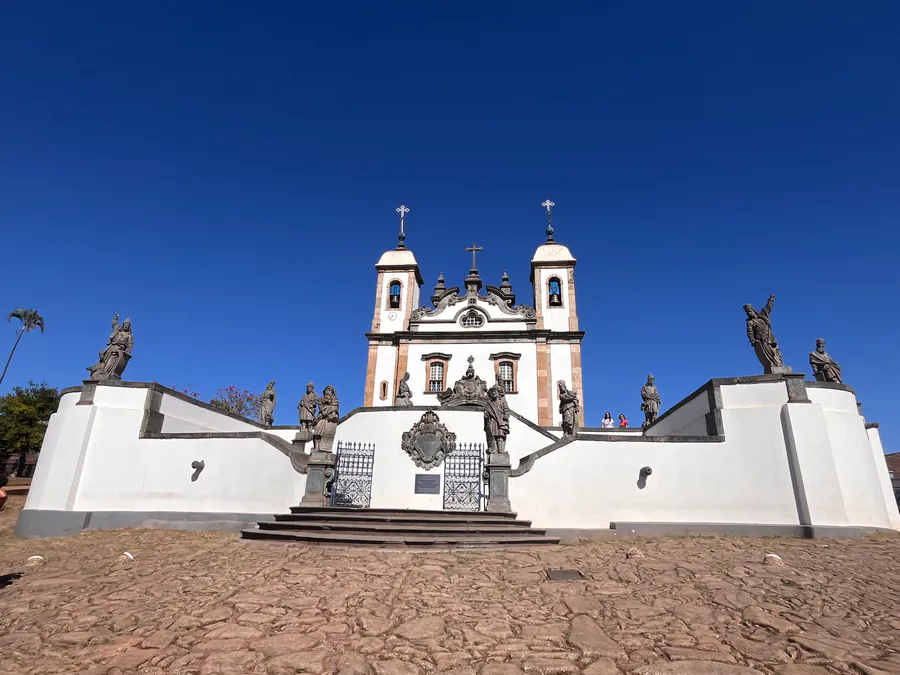
About a 90-minute drive from Ouro Preto, Congonhas is home to the Unesco World Heritage site of Bom Jesus de Matosinhos, a monumental complex designed and sculpted by Aleijadinho, Brazil’s most important Rococo artist. Aleijadinho means “the little handicapped one”—he was a leper who had to ask his assistants to tie his tools to his arms.

Aleijadinho created 12 life-size statues of Old Testament apostles, which are absolute masterpieces. They carry texts from the Bible heralding the demise of an evil empire—a subtle manifesto for the end of Portuguese domination and exploitation.

Story Threads

  • History
  • Inheritance
  • Colonial Wound
  • Return
Media Atlas 6 assets

The Narrative Atlas

Four cities.
One impossible story.

In The Face of Reason moves across continents and memory, tracing the invisible threads that bind its characters to places they can neither escape nor return to whole.